






No write-up for the grammy award winning Tinariwen – gig, album, or otherwise – comes without an explanation of their history due to the unique place they hold within the music industry and global culture. You may have heard it already, but knowledge of their journey is essential information to fully appreciate their work.
The ‘band’ began in the late 1970s as a collective of musicians amongst the Tuareg people of Southern Algeria and Northern Mali. They created a guitar driven sound combining elements from their local cultures, that they called “tishoumaren” and the voice of the “ishumar” (approximately meaning “unemployed”). It’s a sound which has since been labelled as ‘desert blues’ but long before bands like Kyuss were even a thing. Their nomadic lifestyle and the difficulties of transportation meant they required a flexibility within their members which continues to this day – rarely taking a fully consistent line-up out on tour other than a few founding members. Life has not been as free and easy as that may sound however, as they were borne into revolutionary families for the Tuareg cause. Since their inception to the present day they have frequently been forced into exile from their homelands by feuding political factions, and even been exposed to the deaths of their loved ones amidst widespread sectarian violence and terrorism. Whilst still relatively unknown within the mainstream, their popularity and exposure in the UK is perhaps as high as it’s ever been so I’m expecting a good attendance tonight at the Ritz.
Sulafa Elyas
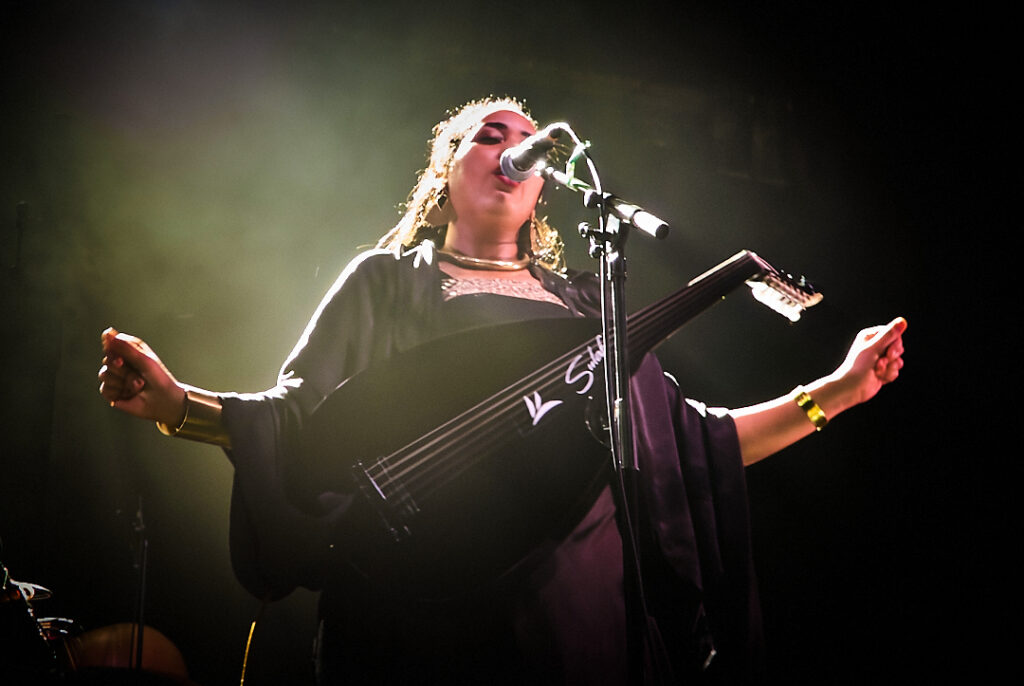
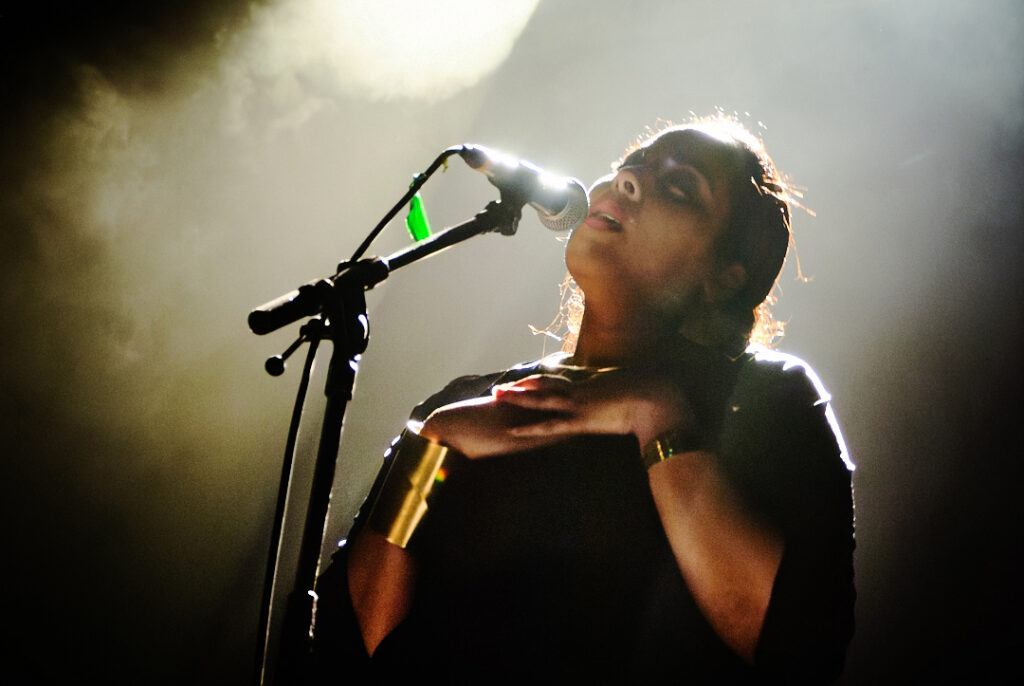
Our opening act is Sulafa Elyas – a Sudanese solo vocalist and oud player – with a backing synthesist. It’s a stark and minimalist start to things with spotlights on each of them and little other lighting. It’s raw – and this helps showcase her striking, graceful voice through a set of ancestral Sudanese compositions. She narrates introductions (in English) whilst the music has already begun, and sometimes it’s not obvious whether this is part of the song or not. The crowd are obeying her every request however, providing background chanted accompaniments and then hushing as soon as the moment calls for it.
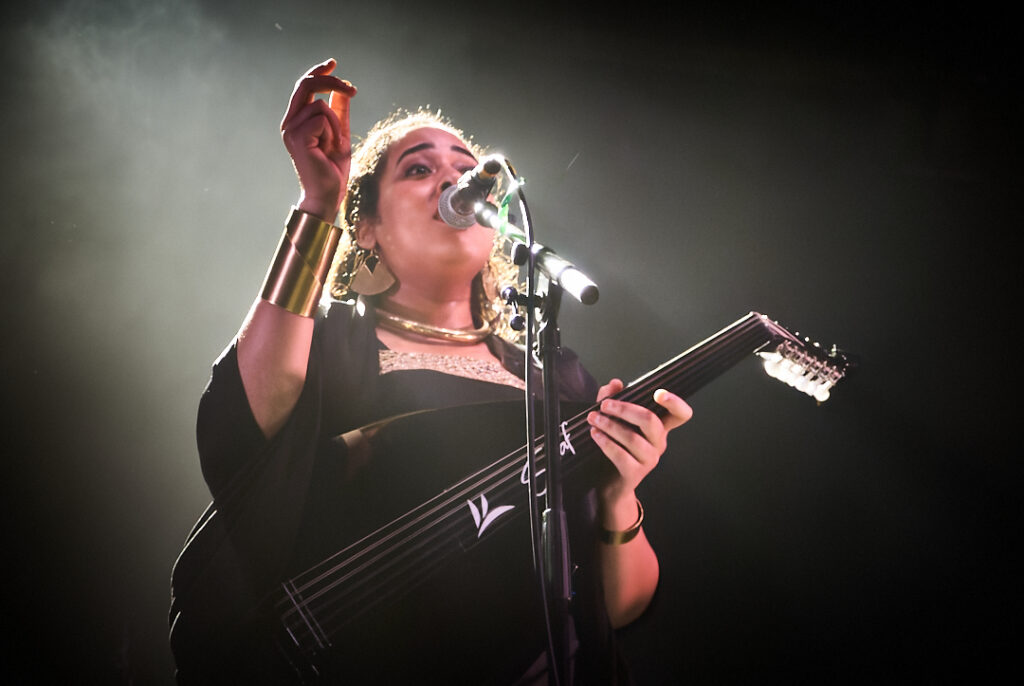
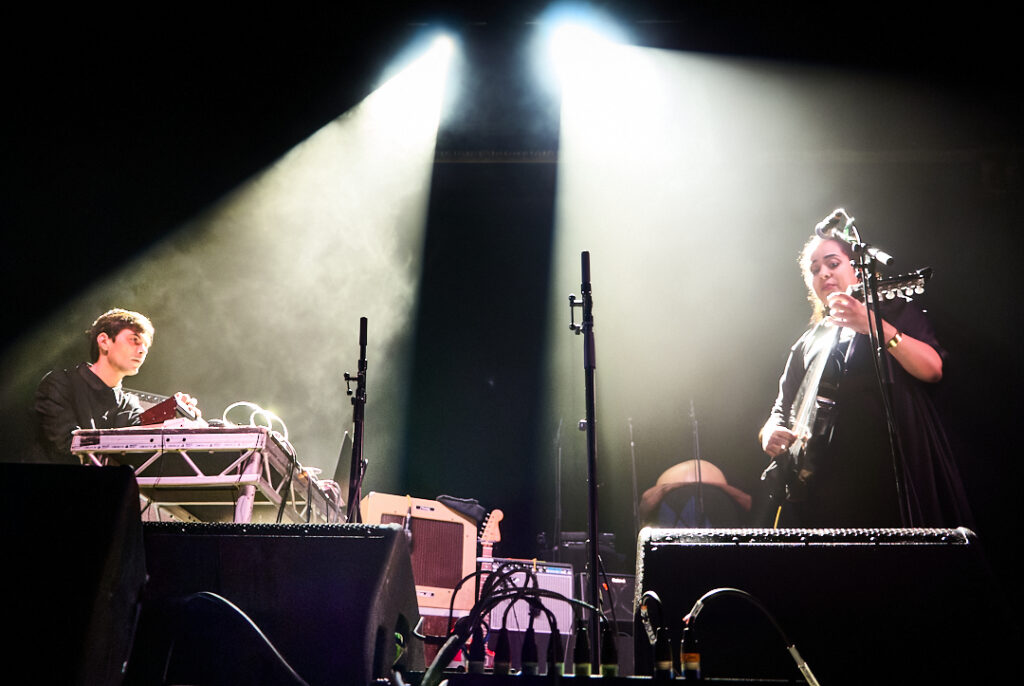
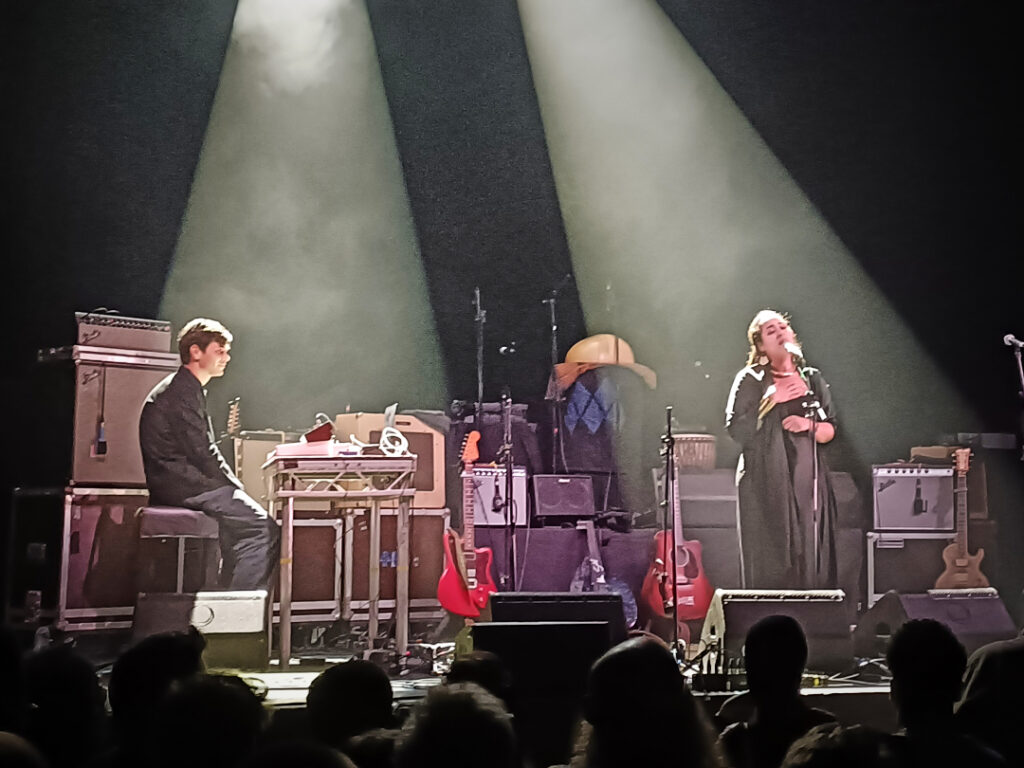
She explains the next song is about Sudanese funeral rites, adding “Even the sadness has its own sound. Women don’t just cry, they dance”, and the performance that follows has an appropriately morose beauty from start to finish. Backing tracks with large choruses underpin some of her later numbers, and whilst the impact for the songs themselves is excellent, it looks a little out of place given the otherwise stripped back nature to things on stage. In all though it’s a very impressive performance that is hugely well received in the room, now a little over three quarters full.
In between acts there’s no songs over the PA tonight, just distant drums, a faint rhythm, and the occasional tribal shriek!
Tinariwen
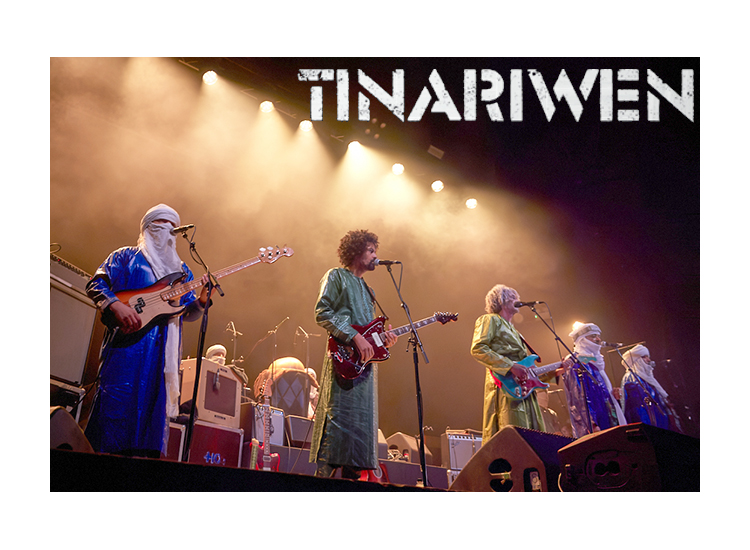
After something so intimate to begin with, the stage is much more crowded for Tinariwen. They are eight strong to begin with, and instead of a drum kit there’s a large calabash at the back of the stage for percussion, which kind of looks like a huge egg nestled on top of a rolled up rug! To anyone who’s never seen them before, the band might easily be dismissed as a wizened novelty act in turbans and brightly coloured robes, not mattering whether they were authentic nomads or not. That is until you settle into their enchanting brand of Saharan rock music of course. I’ve heard them described as a defining example of ‘don’t judge a book by its cover’ when it comes to live music.
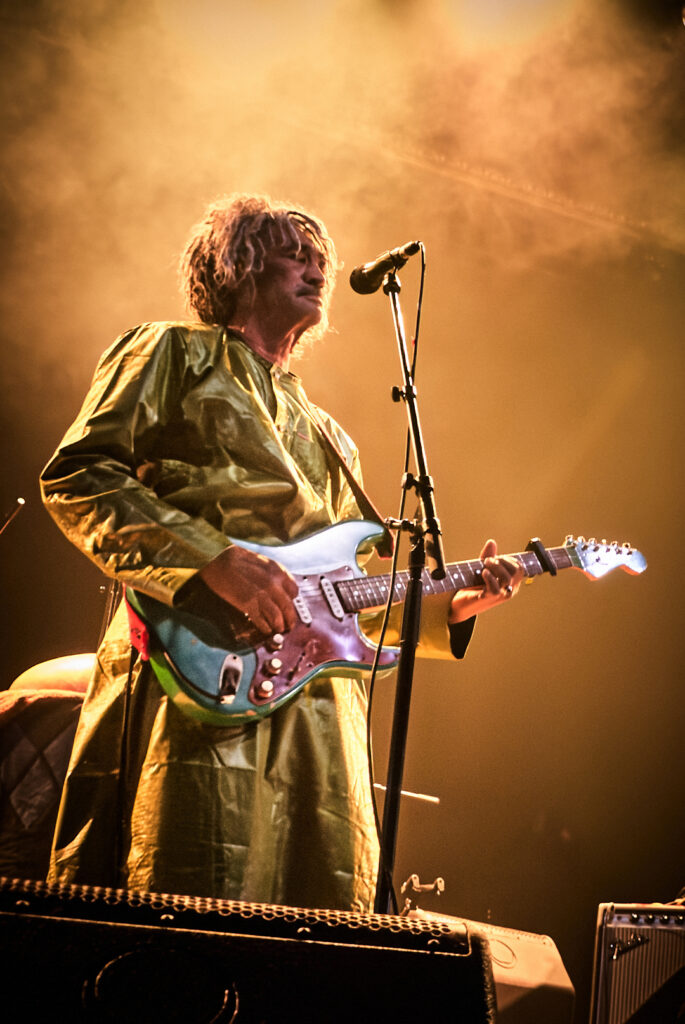
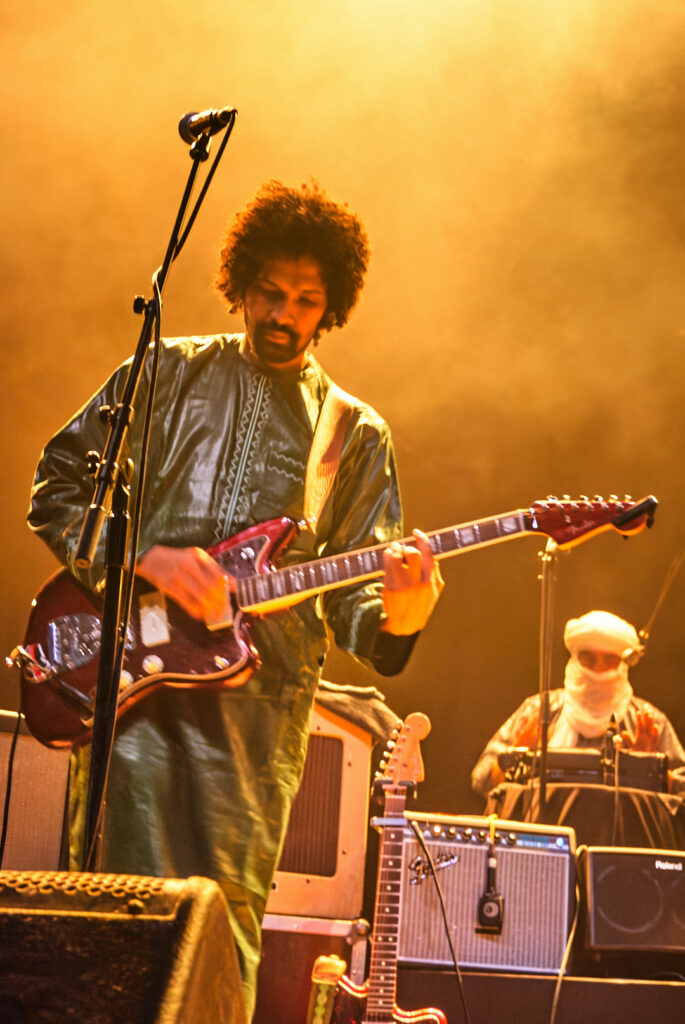
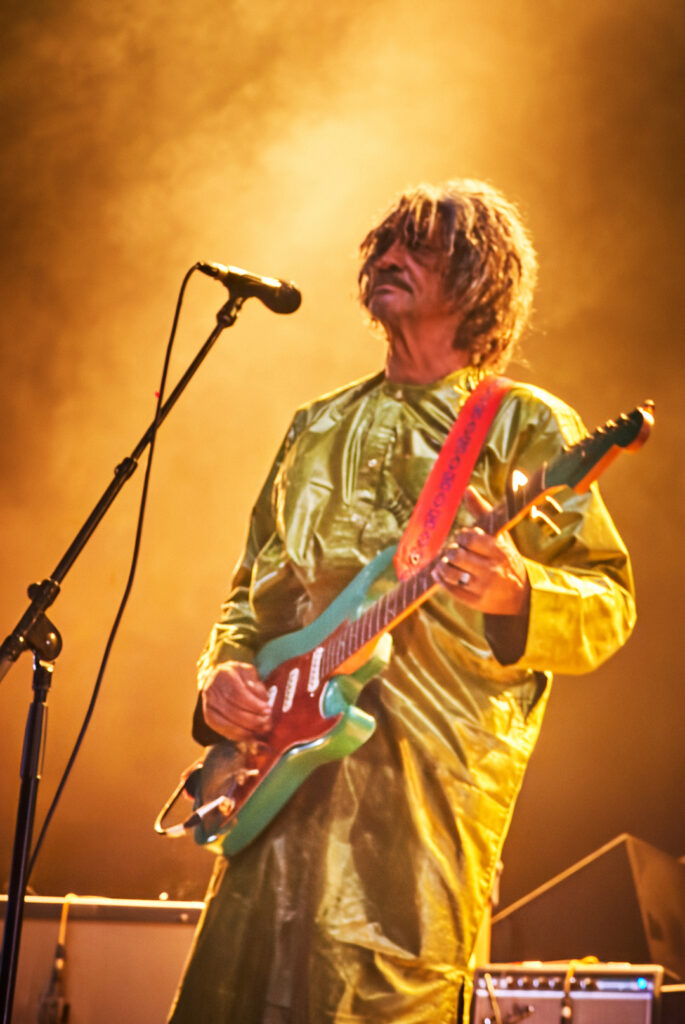
Sung largely in Tamashek, the language of the Sahara, it’s fairly impossible for Western audiences to follow live (bar only the most ardent fans) and you’d need lyrics to understand their tales of struggle and resistance. So no matter how much you may already know, a sense of their history is always in your mind – but does that translate to an oppressive atmosphere within the gig? Absolutely not! There’s something undeniably joyous and uplifting about their music. It is the sound of resilience and hope. Of life!
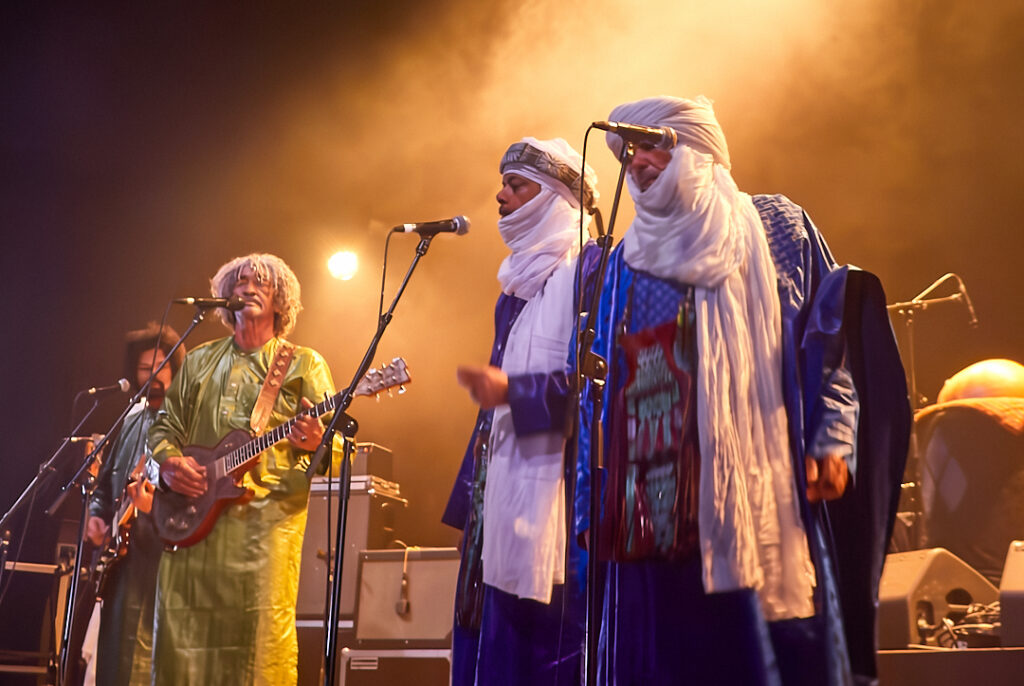
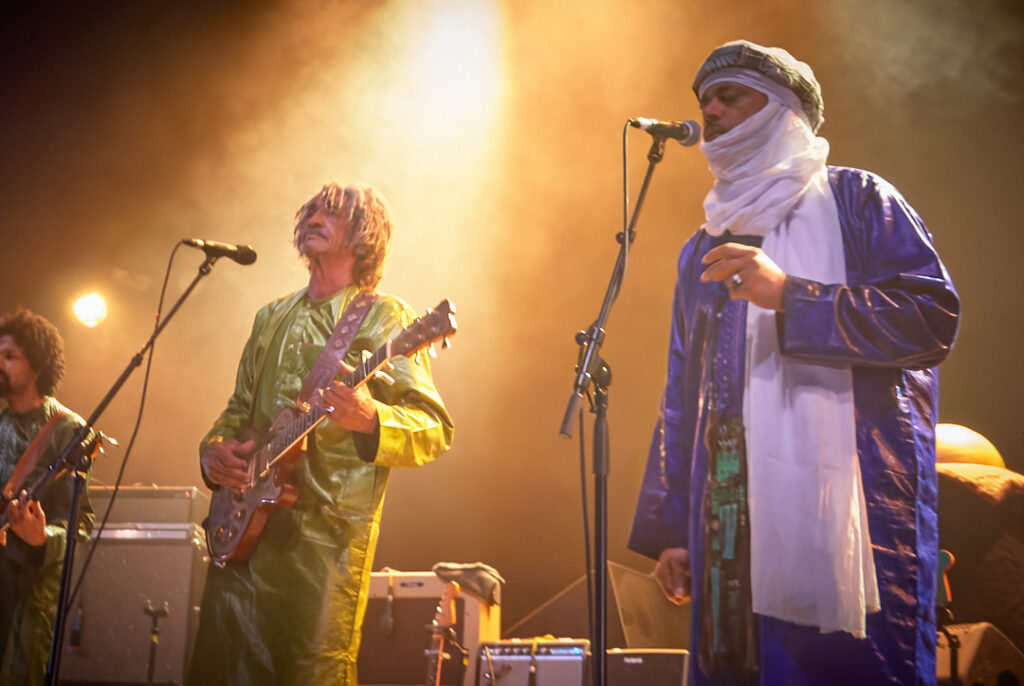
The language/lyrics barrier is less of an obstacle, even for audiences without any prior knowledge, as many of the songs are structured around delicately melodious chanting that’s easily followed if you can pick up a tune. It’s not about individual pieces or parts, but the power of the collective as a whole, and the audience are invited into that through frequent clapping and dancing parts. There is indeed widespread dancing amongst the audience, many adorned in multicultural attire, and they’re led by dance ringleader and original band member Alhassane Ag Touhami, twisting and swaying at the front – as if Bez from the Happy Mondays had suddenly become a pilgrim!
Although deciphering exactly what is being sung about may be necessary for some, the very nature of how it’s sung and the textures emanating from the rest of the band show in abundance that sentiment, feeling, emotion and thought can all be communicated without the need to know what the subject matter of each song is. It leaves you with a half-mysterious/half-fulfilling blend of warm abundance; truly wonderful.
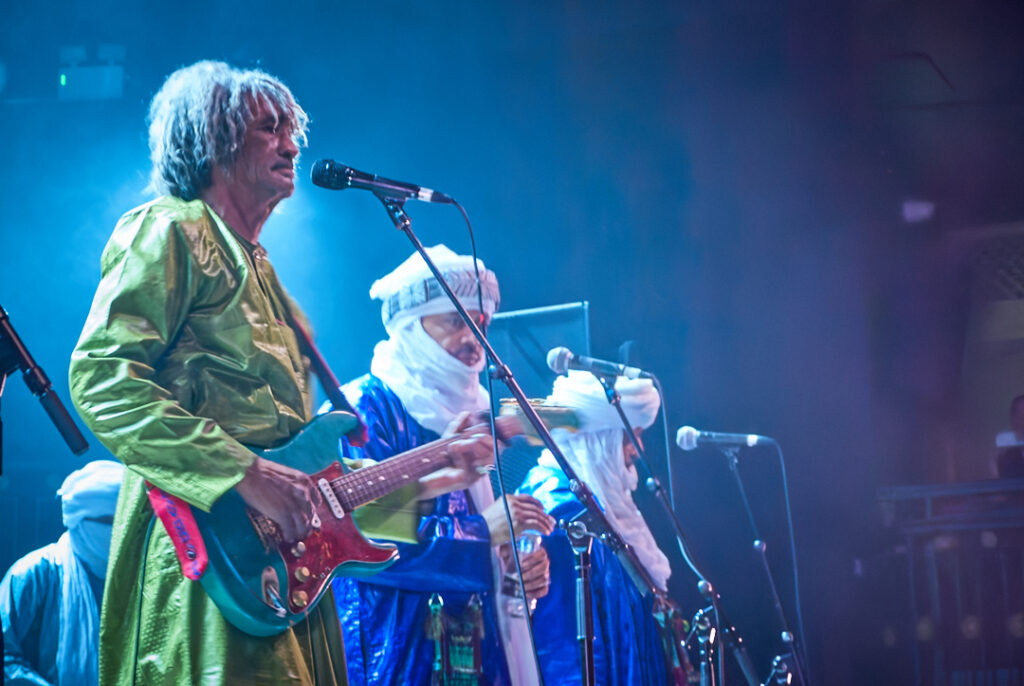
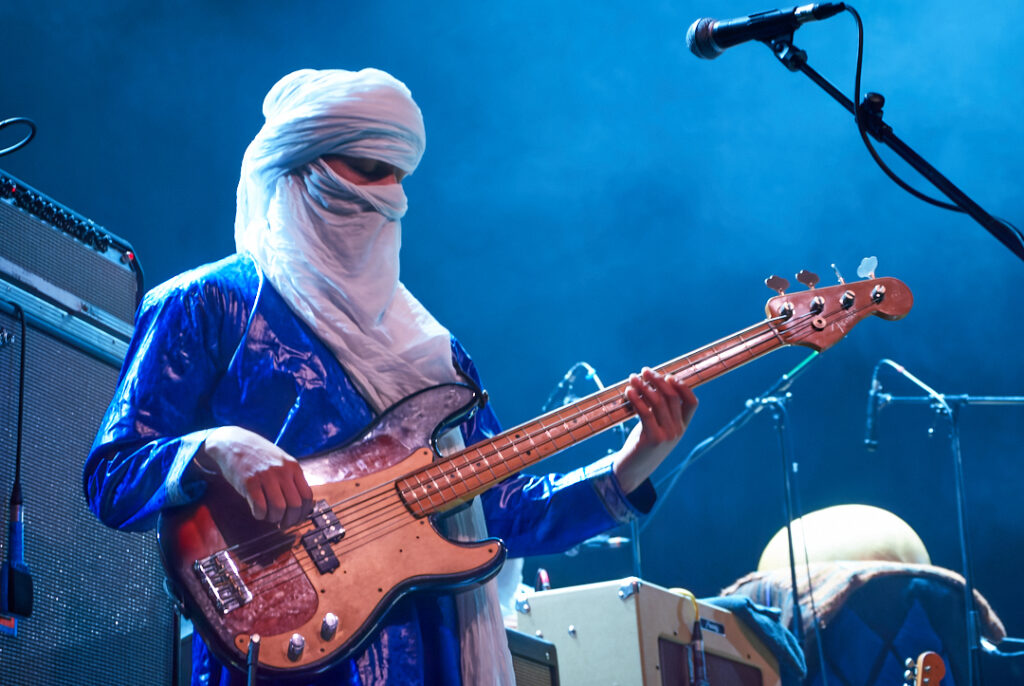
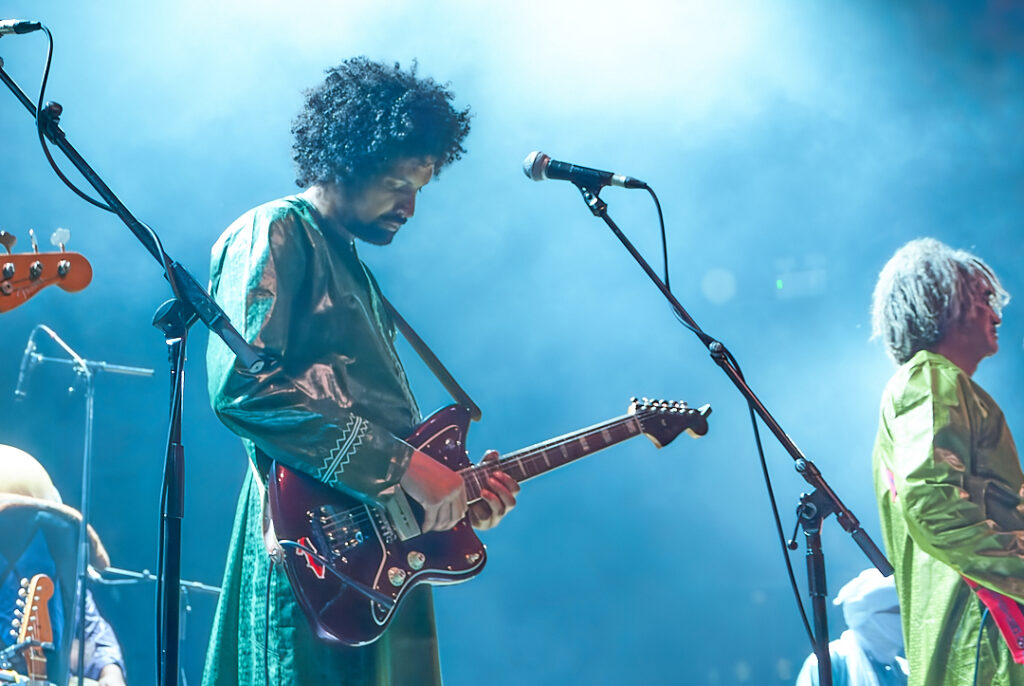
Never shy on collaborating, the band bring Sulafa Elyas out to join them for a song, adding to the many layers of vocals at play (she also features on latest album ‘Hoggar’, along with José González – he of ‘Heartbeats’ fame). Lead vocal duties are often traded between the songs, and acoustic guitars may change out for something heavier, but the general formula is one of soft, driving rhythms that build and build with extra layers of mesmeric, crisp guitar melodies and group choruses. At times it can resemble one big super-jam but there’s more structure than that – with highly complex dual percussion throughout, and at times earth-shattering bass holding the low end down.
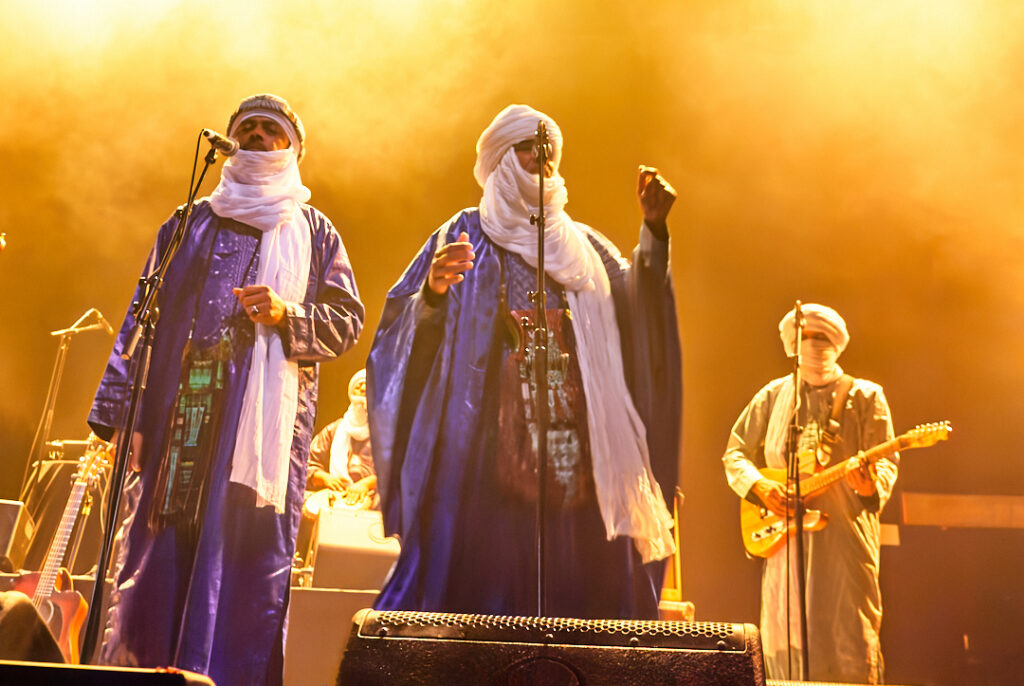
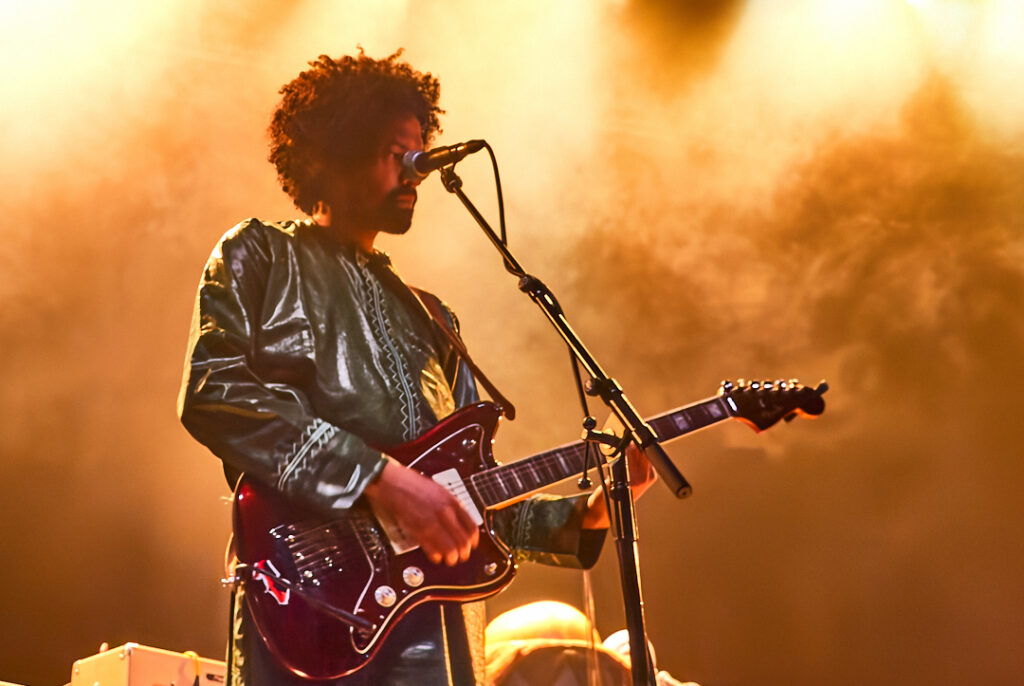
There’s been quite a few tracks from the new album in the first half of their set, and then things move to older material – including some from 2017’s highly acclaimed ‘Elwan’ record – such as crowd favourites ‘Tiwàyyen’ (Dunes) and ‘Sastanàqqàm’ (I question you). Ibrahim Ag Alhabib – the band’s own declared founding father – even treats us to a short solo section to begin the encore, and then after an hour and a half of hypnotic, sun-frazzled psychedelic rock we’re all done. I believe they only do brilliant performances, and this has been another. There’s a juxtaposition in Tinariwen’s music – a plaintive cry beyond modest meditation that speaks of a musical life on the run. Forever shifting, forever morphing, forever changing. But what the band seem to be saying is that there’s jubilance in this painful rebellion. To live a life where they can share their resilient joy and enthusiasm is one they clearly cherish.
Review by Dave Yarwood & Dom Martin
Pics by Dave Yarwood