







Released November 14 2025 by Music Theories Recordings
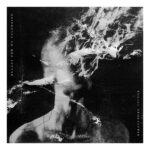
Whenever the conversation turns to the greatest guitar players of all time, Steve Morse is inevitably part of it. His career has been defined by restless creativity and uncompromising musicianship. Emerging in the mid-1970s with the Dixie Dregs, he helped redefine jazz-rock fusion, earning multiple Grammy nominations along the way. In the following decade, he formed the Steve Morse Band and joined arena rock heavyweights Kansas, before being recruited by Deep Purple in 1994—eventually becoming their longest-serving guitarist. Even while playing on the world’s biggest stages, Morse never stopped innovating, exploring new territory with projects such as Living Loud, Angelfire, Flying Colors, and the G3 guitar supergroup. His departure from Deep Purple in 2022, prompted by the need to care for his wife before her passing in 2024, marked one of the most personally difficult chapters of his life. Against this backdrop Triangulation feels like more than just a new album—it feels like the return of a master reconnecting with the essence of his voice: a six strings voice.
The album opens with a track (‘Break Through’) that immediately commands attention: strong, spacious, and cinematic in scale. The sound is big and immersive, and the level of musicianship is outstanding. Every player operates at the highest level, with confidence, precision, and authority. The track unfolds as a dynamic instrumental journey filled with changes and variations, grounded in a bruised, powerful rock foundation that remains solid while allowing the arrangement to breathe.
The following ‘Off The Cuff’ confirms this extraordinary level of playing. The guitar soloing is astonishing—virtuosic, fast, and precise, yet always tasteful and deeply musical. The phrasing carries emotional weight; each note, bend and vibration matters. Equally striking is the relationship between guitar and bass. Rather than simply supporting the lead, the bass dances with the guitar, constantly in motion, weaving and responding in a fluid exchange. The bass solo itself is a highlight, combining technical brilliance with refined musicality and superb tone.
Throughout the album, the arrangements are in constant motion. There are many changes, fills, and variations, ensuring the music never becomes static or repetitive. Despite the immense skill on display, the album never feels like a technical showcase. Instead, it feels designed to entertain and engage. The sensation is that of being at an epic live gig—powerful, captivating, and full of momentum.
A strong theatrical quality emerges as the album progresses. The continuous evolution of ideas gives the sense of a musical spectacle, where new characters, moods, and energies step onto the stage at any moment. This creates anticipation and excitement, much like theatre—sometimes even more so than conventional instrumental music. The richness of the arrangements and the deep interaction between the musicians make the experience constantly evolving.
Despite being entirely instrumental, the album is filled with dialogue: the instruments—especially guitar and bass—communicate continuously, sometimes dancing together, sometimes challenging each other, sometimes supporting one another into new territory. The interplay raises the question of whether the music is improvised or composed, and the answer seems to be both. It has the urgency and spontaneity of improvisation, yet also the coherence and grandeur of masterful orchestration. Nothing feels artificial or manufactured. Every acceleration, every variation, every phrase arrives at exactly the right moment, guided by an exceptional sense of musical momentum.
‘The Unexpected’ highlights beautifully layered guitar multi-tracking, creating a polyphonic, symphonic effect. Multiple guitar voices interweave with orchestral depth, producing a rich, expansive sound while remaining precise and articulate.
‘March Of the Nomads’ introduces a march-like section with Celtic melodic elements—another unexpected but perfectly integrated influence. At this point, it becomes clear that the album resists categorisation. It isn’t simply blues rock, fusion, even prog rock or anything else. Instead, it stands as a statement of artistic freedom: great musicians exploring all the music that feels genuinely theirs. The album is less about genres and more about shared musical discovery.
‘Ice Breaker’ brings a surge of energy, driven by a solid guitar riff and a deeply groovy bass line. The momentum is irresistible—it’s impossible not to move. Once again, the track showcases intricate guitar layering, powerful riffs, expressive solos, and a strong sense of collective orchestration that balances groove with grandeur.
The production across the album is outstanding. There is exceptional transparency and detail, allowing every nuance of each instrument to be clearly heard. Even in the densest, most complex passages, each part remains distinct. The high-resolution sound also preserves the full dynamic range—both of the overall mix and of each individual instrument. The music breathes, and the many subtle details embedded in the rich arrangements become fully appreciable.
The palette of inspirations is vast: blues, classical solemnity, jazz phrasing, hard rock power, symphonic grandeur, and intimate minimalism. Yet the album never feels like a collage. Instead, it finds its own identity through balance and cohesion. Emotionally, the record never repeats itself—not between tracks, and not even within a single piece. Moments of melody give way to intricate jazz passages, powerful rock sections, orchestral peaks, and quiet, intimate spaces where a few simple notes carry raw emotion. Even the most virtuosic moments serve the journey rather than ego, transporting the listener through changing landscapes and shifting emotional terrain.
Four of the nine tracks feature guest musicians, further expanding the album’s expressive range. Each guest brings a distinct musical sensitivity and perspective, enriching the overall experience. Steve Morse comes across as a generous and inspired host, clearly enjoying the creative exchange. These collaborations feel like great jam sessions—musicians leading one another, pushing boundaries, and drawing out the best from each other through shared exploration.
The final track, ‘Taken By An Angel’, slows the pace, closing the album on an uplifting and reflective note. Built around warm chords, it carries a serene atmosphere, with a hint of Mike Oldfield in its character. Despite the slower tempo, it feels radiant and affirmative—a moment of contemplation after the journey, looking back at what has been explored and discovered, or contemplating the peace after the storm. It leaves the listener with a sense of calm amazement and quiet celebration.
Triangulation ultimately feels like a master reaffirming his voice—not through nostalgia, but through curiosity, freedom, and deep musical connection. It is a journey through sound, emotion, and imagination, guided by musicians who know exactly when to lead, when to listen, and when to let the music speak for itself.
Track Listing (vinyl):
Disc: 1
Break Though
Off the Cuff
TexUS (ft. Eric Johnson)
The Unexpected
March of the Nomads (ft. Scott Sim)
Disc: 2
Ice Breaker
Tumeni Partz
Triangulation (ft. John Petrucci)
Taken by an Angel (ft. Kevin Morse)
Review by Stefano Barone